Showing posts with label award winner. Show all posts

Thursday, March 3, 2016

Robert F. Sibert Award

The Robert F. Sibert Award has been award annually since 2001 to the most distinguished informational book for children.  This award will not be given to poetry, folktales or any other works of literary fiction.  The informational category for children has greatly improved.  Now you can find high quality informational books on a variety of subjects.  They are a great way to supplement or even replace textbooks.


The 2016 Sibert Award was given to Duncan Tonatiuh for his book Funny Bones: Posada and His Day of the Dead Calaveras. I love, love, love this book.  It has so many possibilities to be used cross-curricularly in the classroom, plus it is just interesting.

Tonatiuh tells the story of Jose Guadalupe Posada, an artist from Mexico.  Posada's story is interesting enough but Tonatiuh adds so much to it. Posada did not start out making drawings of calaveras (skulls) in the beginning.  He slowly worked his way into that subject and actually used his calaveras to speak his opinion and thoughts (which were often political). Throughout his life Posada used many different types of styles to make his artwork.  Some of his drawings were lithographs, etchings and engravings.  I love how Tonatiuh includes a step by step process for each of the different types of printing.  Tonatiuh does a great job of using simpler language to tell the somewhat complicated story of Posada.  I also love how Tonatiuh uses some of Posada's actual prints as illustrations.  With the print a possible message that Posada was trying to get across is included.


This book is very kid friendly and could be used as a supplement to history class, cultural studies and even art class.  It would be a great addition to any teacher's library. At the end the book is begging to be turned into an art project.  The last line is, "What would Posada's calaveras look like now days?" It is practically encouraging children to create their own calaveras print with a message.


2016 Sibert Award Honors

Drowned City: Hurrican Katrina and New Orleans by Don Brown
The Boys Who Challenged Hitler by Knud Pedersonn and The Churchill Club
Turning 15 On the Road to Freedom by Elspeth Leacock and Susan Buckley
Voice of Freedom by Carole Boston Weatherford and Ekua Holmes

Happy Reading!
Laura

Wednesday, March 2, 2016

Theodor Seuss Geisel Award

I honor of the great, late Dr. Seuss's birthday today we will check out the Geisel Award winner (named after the Seuss himself). The Geisel Award for outstanding authors and illustrators of beginning readers is a relatively new award.  This is only the 10th year for the award.  This year's award goes to David A. Adler (author) and Sam Ricks (illustrator)for Don't Throw It To Mo! 


Don't Throw It To Mo! is a story about little Mo Jackson and his love for football.  Mo is the smallest one on the team and he often has to sit out with the coach.  That never discourages Mo. He practices catching buttered footballs and does whatever Coach asks.  One day his team is playing a game.  The other team laughs and makes fun of Mo and how small he is.  "No one will ever throw it to him," they think, "he is too small!"  Well, they are wrong.  Mo gets in the game and after not throwing it to him two times, the third time the ball is thrown to Mo, he catches it and his teams wins the game.  Great job Mo!

Adler uses simple sentences and dialogue to tell Mo's story, two characteristics of a good beginning reader.  He even uses some receptions (don't throw it to Mo) which beginning readers appreciate because they know what to expect. Children will love hearing how Mo, even though he is small, was able to win the football game.  It will give young beginning readers hope that they too will have a shining moment, even though they are small.

Geisel Award Honors:

A Pig, A Fox and A Box by Jonathan Fenske

Waiting by Kevin Henkes

Supertruck by Steven Savage

Happy Reading!
Laura

Tuesday, March 1, 2016

Stonewall Book Award

The Stonewall Book Award is given out annually to a distinguished book relating to gay, lesbian, bisexual and transgender experiences.  This award also has a non-fiction and literary category, but those are geared more towards adults.  The award has been given out since 1976, under several different names.  The award was first simply called The Gay Book Award, then the Gay and Lesbian Book Award.  The award's name continued to change as we learned more and became more accepting of people who are gay, lesbian, bisexual and transgender.


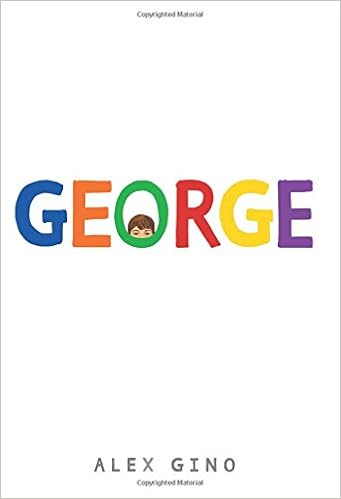
This year's Stonewall Book Award for children was awarded to Alex Gino for the book George.  This book needs to go on everyone's to read list RIGHT NOW! This book is the epitome of what I love about books and literature.  Through reading your eyes are opened and thoughts broadened.  You are able to put yourself into someone else's shoes and have empathy.  Reading diverse books creates diverse people.

George is the story of a person everyone thinks is a boy, because that is what they see, but really she is a girl.  George is in 4th grade struggling with her identity and how to tell those around her that she is a girl.   George's class has just finished reading Charlotte's Web and are now going to perform it for their school and families.  George wants to be Charlotte so bad.  She loves how strong, bold and radiant Charlotte is.  But only the girls are allowed to try out for Charlotte.  With the help and encouragement of her best friend, Kelly, George tries out for Charlotte.  Her teacher gets upset and thinks that it is a joke so George does not get the part, Kelly does.

George eventually gets the courage to first tell Kelly that she is a girl and then her mom and brother.  Kelly is the most accepting of the idea saying to George, "If you think you're a girl....Then I think you're a girl too!" To George's surprise her brother Scott also takes it well.  George's mom is having a hard time accepting it.  Then George and Kelly come up with a plan to switch places during the play so that George can be Charlotte.  Everyone is blown away by her performance and people begin to understand what George has been struggling with.

The book ends with Kelly asking George to go on a girl's trip to the zoo (wearing girl clothes and everything).  George is so excited at the idea, and even more when she finally gets to share her girl name with Kelly... Melissa.

The plot alone is enough to put this book on the must read list, but the way Gino includes George's thoughts and struggles (all the way down to hating going into the boy's bathroom), is what knocks this book out the of the park.  There are George's sitting in our classrooms and at our dinner tables across this country and we need to let them know we accept them for who they are and that there are people out there just like them.  If nothing else George gives us a glimpse into the difficult inner struggle transgender children are dealing with.  Don't miss this one!

Stonewall Book Award Honors

Wonders of the Invisible World by Christopher Bazark

Sex Is A Funny Word: A book about bodies, feelings and YOU! by Cory Silverberg and Fiona Smythe

Happy Reading!
Laura


Monday, February 29, 2016

Pura Belpre Award

The Pura Belpre Award is awarded annually to a Latino writer and illustrator whose children's books portray, affirm and celebrate the Latin culture.  The award is named of Pura Belpre who was the first Latina librarian in the New York Public Library system.  She dedicated her life to providing access to books for Latino families. She instituted a bilingual story hour and increased access to bilingual books.  She was also known for bringing Puerto Rican folklore to America.  The award was first given out in 1996 every two years and then annually in 2009.

The 2016 Pura Belpre Illustrator Award goes to Rafael Lopez for Drum Dream Girl by Margarita Engle.  Drum Dream Girl is a poem about a real girl named Milo who wants to play the drums, but isn't allowed because playing drums is only for boys.  She continues to practice and work hard until she is allowed to play the drums at an outdoor cafe.  Lopez does a great job of adding to the story with his illustrations.  He uses folksy artwork with bold colors to tell the little girl's story through pictures.  You are transported to Cuba with the birds and colorful settings. Lopez uses warm colors to show the opposition she met when trying to play drums.  He often portrays Milo flying or in the sky to show how she never stopped dream or drumming.  My favorite picture is of Milo's father pulling her down from the sky.  The text with this picture tells us that Milo's father finally agreed to find a music teacher to listen to her play.  Him pulling her down from the sky symbolizes that playing the drums is no longer a dream for Milo, but a reality.


Drum Dream Girl is a great book for kids, not only because of the Latin influences can help children understand a culture different from their own, but because Milo never gave up on her dream.  Her grit and persistence paid off and she played the drums for all to hear!

Happy Reading!
Laura

Pura Belpre Illustrator Award Honors

My Tata's Remedies illustrated by Antonio Castro L.
Mango, Abuela and Me illustrated by Angela Dominguez
Funny Bones: Posada and His Day of the Dead Cavalaeras

Friday, February 26, 2016

Schneider Family Book Award

The Schneider Family Book Award is a newer award that has been awarded annually since 2004.  The award goes to authors and illustrators who create an artistic expression of the disability experience.  We all know children and people who struggle with disabilities, whether they are mental, physical or emotional.  Including books in our home and classrooms about people with disabilities creates a more open and accepting culture.  Check out past winners of the Schneider award for other great books that speak about disabilities.

The award is given out to several books, usually they are broken up into age groups.  I am going to share the winner of the 0-10 age range.  I will list the other winners and hopefully at another time I will be able to share more about those with you.


Emmanuel's Dream: The True Story of Emmanuel Ofosu Yeboah by Laurie Anne Thompson and illustrated by Sean Qualls is the true story of a boy born with only one leg in Ghana, West Africa. In West Africa, if you are born with a disability (physical or mental) you are shunned and thought to be useless.  Emmanuel's mother refused to believe that.  She always told Emmanuel that he could have anything he wanted, he only had to get it for himself.  So that is what Emmanuel did.  He learned to crawl and then hop.  He shined shoes to earn money.  When he became too heavy for his mother to carry, he hopped to school on one leg- 2 miles there and back. He played soccer and rode a bike- he did not let having only one leg stop him from doing anything!  He constantly met people telling him he could not do it, which only made him work harder.  When he was only 15, as his mother was dying, she told him to never give up.  That is when Emmanuel really began dreaming.  His new dream was to tell everyone that being disabled does not mean unable.  He made a plan to ride his bike across Ghana and back, with a shirt that said The Pozo or the disabled person.  His boldness, determination and grit encouraged others with disabilities to come out of their homes, some for the first time.  He proved to everyone that being disabled definitely does not mean unable.

What an inspirational story that everyone needs to hear.  Emmanuel has received many awards since his ride across Ghana (in 2001).  Oprah created a documentary about his life called Emmanuel's Gift (which he starred in) and most importantly the government of Ghana passed the Persons with Disability Act- which gives equal rights to people with disabilities in Ghana. I added two short clips to this post, one is when he received the EPSY award in 2005 and another that is an update on what Emmanuel is up to now.


Other 2016 Schneider Family Book Awards

Fish in a Tree by Linda Mullaly Hunt
The War That Saved My Life by Kimberly Brubaker Bradley
The Unlikely Hero of Room 13B by Tessa Toten

Happy Reading!
Laura

Thursday, February 25, 2016

2016 Caldecott Award Winner


The Caldecott Award is given annual to the most distinguished artist of a picture book for children.  A distinguished artist will create pictures that add to the story and help to move the story along, they can't just be good pictures.

The Caldecott Award is named after 19th century English illustrator Randolph Caldecott who began illustrating different Mother Goose Rhymes.  His work and creativity have inspired illustrators from generation to generation.

The 2016 Caldecott Award goes to Sophie Blackall for her illustration in Finding Winnie: The True Story of the World's Most Famous Bear  by Lindsay Mattick. Check out the book trailer for a good synopsis of the book


In the story Blackall creates beautiful detailed pictures that dominate the page.  In essence her illustrations are the backdrop to the story.  The books starts with a picture of a mother and her son lying in bed, telling a bedtime story.  Then the pictures begin to tell the story of veterinarian Harry Colebourn, but on each page there is a small snippet of a picture of the mother and son still lying in bed.  The pictures of Harry's story are beautiful and telling.  They perfectly depict the time period and the emotions of Harry.  You can see the anger on the Colonel's face and the shock on the other soldier's faces when Harry brings Winnie the bear with him.  You can see just how close Winne and Harry are when you see them sleeping together in Harry's tent.  When it is time for Winnie and Harry to part ways Blackall sweetly shows the sadness in their face with a picture of Harry and Winnie's foreheads touching.  My three year old loved this book, not just for the story, but I think more for the pictures.  The entire time we were reading he was pointing things out in the pictures, which helped him to understand the story better (because we know young children understand the pictures better first!)

The end of the book is filled with photographs of Harry's journal pages and pictures of Harry and Winnie.

Happy Reading!
Laura

2016 Caldecott Award Honors


Trombone Shorty illustrated by Bryan Collier
Waiting illustrated by Kevin Henkes
Voice of Freedom illustrated by Ekua Holmes
Last Stop on Market Street illustrated by Christian Robinson


Thursday, June 4, 2015

First the Egg


Every once in a while you come across a book that is fun to read aloud, but also fun to use as a basis for endless writing projects.  First the Egg  by Laura Vaccaro Seeger is that kind of book.  It's versatility reminds me of The Important Book by Margaret Wise Brown.


First the Egg is such a simple book, 41 words in the entire book.  Seeger repeats first the ________ then the ___________ through out the entire book, starting of course with first the egg, then the chicken.  Kids will like listening to the book out loud because they can guess what might come next in the predictable text.  Seeger also briefly touches on some basics of the life cycle by including tadpoles, caterpillars and and seeds.

With such a simple text pattern this is a great author's craft to teach students to use in their own writing.  The easiest place to start would be in science when studying the life cycle , or even food chains.  A life cycle book could start first the joey, then the kangaroo.  First the baby then the child and on and on.  To use this text pattern for teaching or writing about the food chain simply start with the bottom of the food chain and work your way up.  First the grass, then the rabbit.  First the rabbit, then the hawk and on and on.

Science is not the only subject area that this text pattern could be used.  Social Studies is full of cause and effect.  Older students could use this text pattern to explain starts of wars or other conflicts throughout history.  It is great to have a book like this in your collection to use in a variety of ways across all ages, even my three-year old enjoyed having this one read aloud.

First the Egg is also a Caldecott Award and Theodore Seuss Geisel Honor book, just another reason to check it out!

Happy Reading!
Laura

Thursday, September 11, 2014

Never Forget

Today marks the 13th anniversary of 9/11.  It is so hard to believe that it was 13 years ago my sociology professor got a phone call in the middle of class, it was his wife telling him a plane had crashed into the World Trade Tower.  He immediately told us to go home, "This is not where you need to be, this is not good.  Go home and check on your families," he told us.  By the time I got back to my dorm and turned on the television a plane had struck the other tower.  Like everyone else in our country I was shocked and scared.

In the days after 9/11 our country united.  It was probably one of the most patriotic times I can remember in my life time.  Everyone was truly proud to be an American.  Everyone was helping one another, supporting one another.  You could not go anywhere without seeing a flag flying.  It was bright side to a horrific tragedy.

It is crazy to think that most school aged children were not even born when 9/11 happened.  Just like I was not living when Pearl Harbor was bombed, Kennedy was assassinated or Martin Luther King Jr. killed.  But just because I was not alive at the time, does not mean I don't need to know about it.  Our children need to know what happened on 9/11 and more importantly how we came together as Americans to support, reach out and love one another.  It can be a difficult topic to approach, especially with children, so many issues that are hard to understand.  Luckily, we can always turn to literature to help us teach children.


The Man Who Walked Between the Towers, by Mordicai Gernstein is the true story of Philippe Petit, a tightrope walker who dared to walk between the two towers.  Phillipe normally performed in the park.  But when he saw the towers being built he just had to walk between them.  One night him and some friends strung a wire between the two towers and at dawn Phillipe began to walk between them.  Quickly the police ran to the top of the towers yelling, "You are under arrest."  But no one would come and get him as long as he was on the wire.  "For almost an hour he walked back and forth, he walked, danced, ran and knelt in a salute upon the wire."  Eventually he surrendered to the police and was sentenced to performing for children in the park.  The book ends with Phillipe falling, but catching himself, during one of his performances, and telling us the towers are gone now but their memory is still imprinted in the sky.

For kids who know nothing about the towers, this book offers a story about them as well as beautiful pictures.  The reader will also notice how Phillipe, although he fell, was able to catch himself, which is just what America did.  On 9/11 America fell, but we were able to catch ourselves and 13 years later we are still a country where freedom reigns.

How do you talk to your kids about September 11?

Never Forget,
Laura

Tuesday, February 11, 2014

Geisel Honor Books

The Geisel Honor Books are all books that are written for early readers.  What is neat about this year's honors is that all the books hit different spot on the spectrum of "early reader"


First on the spectrum is the book Ball by Mary Sullivan.  This book is written for your earliest readers because there is only one word in the entire book... you guessed it ball.  Most of the story is told through the humorous pictures and the punctuation included with the word ball.  Ball is the story of a dog who loves to play ball.  As soon as he wakes up he has is ball and is begging his little girl to throw the ball.  When she has to go to school he is left alone and has no one to play catch with.  He tries mom, the baby and the cat but no one wants to play.  He takes a nap and dreams of catching the ball.  Then finally the little girl gets home from school and they can play ball again.  What is neat about this book is that anyone can read it because all it says is ball!  My 21 month old loves this book and will bring it to us saying, "ball."


The next book on the spectrum is ironically also about a ball.  A Big Guy Took My Ball by Mo Willems.  Willems is no stranger to writing award winning book, but he really knocked it out of the park with this one.  This book is for an early reader who has great knowledge of sight words and can use some other decoding strategies to figure out harder words, most first graders could probably read this by the middle of the year.  In this Elephant and Piggie book Piggie was playing with a big ball when a big guy came and took it.  Gerald wants to play the hero so he decides to go and get Piggie's ball back.  Then he sees the big guy and he is BIG.  Gerald gets scared and does not get the ball back for Piggie.  While Piggie and Gerald and talking about how BIG this BIG guy is they hear a loud voice say, "EXCUSE ME."  It's the big guy.  It turns out the ball belonged to the big guy and he is sad because no one ever wants to play with him.  Elephant and Piggie make the BIG GUY feel better by offering to play with him.  This book not only teachers the concept of big and small but also about how to make others who are different feel welcomed.  You will find out very quickly that if you read this one out loud children will love it and will be laughing out loud!


The Geisel Honor book on the spectrum is Penny and Her Marble by Kevin Henkes.  This book is a short beginner chapter books, your child should be able to read this on his or her own by then end of first grade or beginning of second.  You can see what a big difference there is between A Big Guy Took My Ball and Penny and Her Marble, children really develop in their reading during first grade.

In Penny and Her Marble Henkes takes Penny on yet another adventures (this is the third book so far in the Penny series).  This time Penny is taking a walk and finds a marble in her neighbor's yard.  She picks the pretty blue marble up and takes it home.  Once she is home she feels guilty for taking the marble, thinking that it might belong to her neighbor.  She could not eat dinner, she couldn't even eat dessert!  That night Penny had bad dreams about the marble.  The next morning she decided to take the marble and put it back in her neighbors yard.  Just as she was turning around to go home her neighbor stopped her.  Penny's neighbor wanted her to have the marble!  Penny was so excited to get to keep the pretty, blue marble!

Hope you enjoy all of these great early readers!

Happy Reading!
Laura

Wednesday, February 5, 2014

The Caldecott Honors

The Caledcott Medal honored three books this year in addition to the winner (which I will blog about Friday).  Each of the three books honored this year were wordless, which I feel speaks greatly of the illustrators who were able to tell moving stories using only their artwork.


Flora and the Flamingo by Molly Idle is a sweet story of a young girl, Flora, who meets a flamingo.  Flora, who is dressed in pink decides she will mimic the movements of the flamingo.  Through the turning of the pages and the lifting of the flaps the story of friendship unfolds.  One move is a little hard for Flora and she falls, embarrassed.  The flamingo doesn't skip a beat and helps Flora up.  The two then dance a beautiful ballet together, like great friends.  The illustrations are simple but the pink stands out on the plain white pages.  The perfect book for any young ballerina in your life!


David Wiesner is no stranger to the Caldecott Medal.  His books Tuesday, Three Pigs and Free Fall have all either won or been honored by the Caldecott Medal.  His latest wordless book, Mr. Wuffles, is a 2014 Caldecott Honor book.  Just like his other books, Mr. Wuffles, is fully of fantasy.  Mr. Wuffles is a cat, who is picky about the toys that he plays with.  One day he finds the perfect toy, which unbeknownst to him, is a UFO.  Wiesner goes on to tell the story of Mr. Wuffles and the UFO through a comic book style layout.  When Mr. Wuffles breaks the UFO, the aliens must leave their flying saucer to fix the broken piece.  The aliens receive help from some ants hidden behind the radiator, all while Mr. Wuffles is waiting for them.  When the aliens finally make a dash back to their UFO Mr. Wuffles is ready, but not for an ambush!  The ants and other bugs help the alines get safely back to their UFO and they fly off, leaving Mr. Wuffles with no toy to play with.  Wiesner's pictures sure to are spark the imagination of any child, telling a different story every time it is read!


The last 2014 Caldecott Honor book was one that many believed should have won the medal.  Journey by Aaron Becker is a wordless masterpiece taking us all on an adventure to magical lands.  The story starts with a little girl sitting on her front porch looking bored.  She goes inside, picks up her red crayon and lets her imagination take her away.  She travels through her imagined world, sometimes getting into trouble but always using her red crayon to find a solution.  Her red crayon even helps her to make it back home safely.  This is an amazing book with even more amazing pictures and a MUST for every bookshelf!

Here are links to the trailers for all 3 of the 2014 Caldecott Honor books.

Flora and the Flamingo

Mr. Wuffles

Journey

Happy Reading!
Laura

Tuesday, February 4, 2014

2014 Award Winners

Last week the American Library Association announced its award winners for 2014.  This month I am going to take the time to share the books that won and the books that won and the runners up.  The American Library Association gives out several awards each year.  The most popular awards are the Newbery, Sibert, Caldecott and Geisel.

The Newbery Medal is awarded to the "most distinguished children's book published the previous year."  So this year's Newbery Medal winner was published in 2013.  The medal has been awarded since 1922.  The first book to recieve the medal The Story of Mankind by Hendrik Willen van Loon.  All winners receive a gold seal on the cover of the book. The runner's up are called Newbery Honor's books and receive a silver seal on the cover.


Just like the Newbery Medal, you are probably familiar with the Caldecott Medal.  The Caldecott Medal is awarded to the best illustrator of a picture book.  The award was first given in 1938 and its first winner was Animals of the Bible illustrated by Dorothy P. Lathrop.  Just like the Newbery Medal the Caldecott winner receives a gold seal on the cover and the honor books a silver.  


The Sibert Medal is a newer award, first given in 2001.  This award goes to the author and illustrator of the previous year's best informational book.  The first book awarded with this honor was Sir Walter Raleigh and the Quest for El Dorado by Marc Aronson.  Just like with the other awards the book receives a gold seal and the honor books receive a silver seal.


Lastly, there is the Geisel Medal, named after the oh-so-popular Dr. Seuss, who has helped millions of children learn to read.  This award is given to the author and illustrator of the best early reader.  This will often be books with fewer words so that the beginning reader can read on their own.  The first winner of the Geisel Medal was awarded in 2006 to Henry and Mudge and the Great Grandpas written by Cynthia Rylant and illustrated by Sucie Stevenson.  These books also receive seals on their cover.   


So all throughout this month I will be sharing with the this years medal winners and honorees.  Check back often to see what the American Library Association thought were last years best books!

Happy Reading!
Laura

Thursday, January 23, 2014

Snow Days

With much of the country covered in snow and in below zero temperatures I am sure there are plenty of kids at home enjoying a SNOW DAY!

This map shows the snow amounts across the country. 

In honor of the snow and cold temperature, this week's Throwback Thursday is dedicated to the classic by Ezra Jack Keats, The Snowy Day.  In the story Peter wakes up to every child's dream, the ground is covered in deep, cold snow.  He does not waste anytime, eats his breakfast, gets dressed and heads outside to play.  Peter explores the different ways to make tracks in the snow.  He walks with his feet pointed in, he drags his feet and he finds a stick to make a track with.  Peter continues to play in the snow.  He sees the big boys having a snowball fight, he makes a snowman and a snow angel.  The very last thing he does is make a snowball to put in his pocket to save for tomorrow.  That night when he goes to check on his snowball and it had melted.  But it doesn't matter because when he wakes up the next morning the snow is still there and new snow is falling.  


Ezra Jack Keats does a great job of painting a picture of every child's dream snow day.  There is not a single snow day activity that he missed, except for maybe the hot chocolate.  He was even able to capture the sounds of a snow day using words like,  crunch crunch crunch, s-l-o-w-l-y, and plop.  I can't think of a better book to share on a snowy day like today.  

So bundle up and get outside to play because we all know in a couple of months we will be wishing for cooler temps.  

Happy Reading!
Laura

Monday, January 20, 2014

"Love is the key"

Today schools, banks, government offices and many more are given the day off in honor of an extraordinary man and his dream.  Martin Luther King Jr. was a man who gave our nation so much hope and love, that he deserves more than one day to be honored.

Reading aloud a book to your child about MLK might seem like an insignificant way to honor such a significant person in our nation's history, but without reading aloud and discussing who MLK was your child may never understand the importance of his movement.


My favorite book to read aloud to children about MLK is Martin's Big Words by Doreen Rappaport and illustrated by Bryan Collier.  This book so elegantly and simply tells the story of Dr. King's life from childhood until he was taken from this world much too early.  Intertwined in the text are actual quotes and words of MLK.  His own words flow so smoothly with Rappaport's words and adds so much richness to the story. I like that this story tells of Martin as a child because I think that helps children to relate to him even more.  To make the story even more more appealing the illustrations by Collier are amazing.  At the beginning of the book Collier discusses his inspiration for the collages used through out the book, which makes the art speak to you almost as much as the words.

Today would also be a good day to share with kids MLK's most famous speech, "I Have A Dream." Of course you can find a lot of variations on YouTube but there is one very simple video found at Readeez.  This video has one simple picture and you can hear about 1 minutes and 42 seconds of his speech.  The words simple and slowly flow across the screen so older children can follow along with what MLK was saying.  Check it out sometime.

So, today many have been given the entire day off- let's do something that would make Dr. King proud.  Help a neighbor, send a care package to the soldiers, make a meal for someone in need, READ a book to someone.  Dr. King said, "Life's most persistent and urgent question is, 'What are you doing for others?'"  What will you do for others today?

Happy Reading!
Laura

Thursday, September 5, 2013

Throwback Thursday

Today I want to share with you another great book to read aloud for Grandparent's Day.  The Song and Dance Man by Karen Ackerman is a great read aloud for older children and could also be used as a writing mentor text.


The Song and Dance Man is all about a grandpa who used to sing and dance on the vaudeville stage.  The story is told from his grandchildren's point of view.  One day the grandchildren are over visiting their grandparents and grandpa takes them up to the attic.  In the attic he gets out his old props from his vaudeville days and puts on a show for his grandchildren.  They children love watching their grandpa and say, "it is better than any show on TV."  They sing, dance and laugh and in the end grandpa tells them that he "wouldn't trade a million good old days" for the days that he spends with them.  It is a very heart warming story about the good old days that I think many children will relate to.

The figurative language is great in this book.  The sounds his tap shoes make are compared to woodpeckers tapping in a tree and is voice is compared to a canyon echo.  Karen Ackerman uses a variety of author's crafts in this text.  It would be great to use as a mentor text when writing memoirs or personal narratives.  Mostly, it would be great just to listen to!

Happy Reading!
Laura

Tuesday, September 3, 2013

Grandparent's Day Sept. 9

Grandparent's day is coming up on Sunday so this week I wanted to share with you some books about- you guessed it- Grandparents!

One of my favorite books about grandparents is called the Hello, Goodbye Window by Norton Juster,  Maybe it is the wonderful illustrations by Chris Raschka but I think it is more the storyline- that reminds me a lot of my own grandparents.


The Hello, Goodby Window tells the story of a little girl who loves to visit her grandparents, who she calls Nanna and Poppy.  The little girl tells about all the things that she loves to do with Nanna and Poppy and they all revolve around the kitchen window.  She can see Nanna and Poppy waiting for her when she comes to their house.  She can watch what is going on outside through the window.  Her and her grandparents even play a type of peek-a-boo game in the window.  The love that the little girl has for her grandparents is evident and relatable to many children and adults.  

This book touches a soft spot in my heart because my grandma had her own hello, goodbye window.  She loved to sit at her kitchen table and look at the window, and because of that she could always see when we were stopping by for a visit. I cannot wait for my son to be older and to read this book to him and share stories of my own grandparents. 

Check back tomorrow for another great grandparent book!

Happy Reading!
Laura