Wednesday, February 5, 2014

The Caldecott Honors

The Caledcott Medal honored three books this year in addition to the winner (which I will blog about Friday).  Each of the three books honored this year were wordless, which I feel speaks greatly of the illustrators who were able to tell moving stories using only their artwork.


Flora and the Flamingo by Molly Idle is a sweet story of a young girl, Flora, who meets a flamingo.  Flora, who is dressed in pink decides she will mimic the movements of the flamingo.  Through the turning of the pages and the lifting of the flaps the story of friendship unfolds.  One move is a little hard for Flora and she falls, embarrassed.  The flamingo doesn't skip a beat and helps Flora up.  The two then dance a beautiful ballet together, like great friends.  The illustrations are simple but the pink stands out on the plain white pages.  The perfect book for any young ballerina in your life!


David Wiesner is no stranger to the Caldecott Medal.  His books Tuesday, Three Pigs and Free Fall have all either won or been honored by the Caldecott Medal.  His latest wordless book, Mr. Wuffles, is a 2014 Caldecott Honor book.  Just like his other books, Mr. Wuffles, is fully of fantasy.  Mr. Wuffles is a cat, who is picky about the toys that he plays with.  One day he finds the perfect toy, which unbeknownst to him, is a UFO.  Wiesner goes on to tell the story of Mr. Wuffles and the UFO through a comic book style layout.  When Mr. Wuffles breaks the UFO, the aliens must leave their flying saucer to fix the broken piece.  The aliens receive help from some ants hidden behind the radiator, all while Mr. Wuffles is waiting for them.  When the aliens finally make a dash back to their UFO Mr. Wuffles is ready, but not for an ambush!  The ants and other bugs help the alines get safely back to their UFO and they fly off, leaving Mr. Wuffles with no toy to play with.  Wiesner's pictures sure to are spark the imagination of any child, telling a different story every time it is read!


The last 2014 Caldecott Honor book was one that many believed should have won the medal.  Journey by Aaron Becker is a wordless masterpiece taking us all on an adventure to magical lands.  The story starts with a little girl sitting on her front porch looking bored.  She goes inside, picks up her red crayon and lets her imagination take her away.  She travels through her imagined world, sometimes getting into trouble but always using her red crayon to find a solution.  Her red crayon even helps her to make it back home safely.  This is an amazing book with even more amazing pictures and a MUST for every bookshelf!

Here are links to the trailers for all 3 of the 2014 Caldecott Honor books.

Flora and the Flamingo

Mr. Wuffles

Journey

Happy Reading!
Laura

Tuesday, February 4, 2014

2014 Award Winners

Last week the American Library Association announced its award winners for 2014.  This month I am going to take the time to share the books that won and the books that won and the runners up.  The American Library Association gives out several awards each year.  The most popular awards are the Newbery, Sibert, Caldecott and Geisel.

The Newbery Medal is awarded to the "most distinguished children's book published the previous year."  So this year's Newbery Medal winner was published in 2013.  The medal has been awarded since 1922.  The first book to recieve the medal The Story of Mankind by Hendrik Willen van Loon.  All winners receive a gold seal on the cover of the book. The runner's up are called Newbery Honor's books and receive a silver seal on the cover.


Just like the Newbery Medal, you are probably familiar with the Caldecott Medal.  The Caldecott Medal is awarded to the best illustrator of a picture book.  The award was first given in 1938 and its first winner was Animals of the Bible illustrated by Dorothy P. Lathrop.  Just like the Newbery Medal the Caldecott winner receives a gold seal on the cover and the honor books a silver.  


The Sibert Medal is a newer award, first given in 2001.  This award goes to the author and illustrator of the previous year's best informational book.  The first book awarded with this honor was Sir Walter Raleigh and the Quest for El Dorado by Marc Aronson.  Just like with the other awards the book receives a gold seal and the honor books receive a silver seal.


Lastly, there is the Geisel Medal, named after the oh-so-popular Dr. Seuss, who has helped millions of children learn to read.  This award is given to the author and illustrator of the best early reader.  This will often be books with fewer words so that the beginning reader can read on their own.  The first winner of the Geisel Medal was awarded in 2006 to Henry and Mudge and the Great Grandpas written by Cynthia Rylant and illustrated by Sucie Stevenson.  These books also receive seals on their cover.   


So all throughout this month I will be sharing with the this years medal winners and honorees.  Check back often to see what the American Library Association thought were last years best books!

Happy Reading!
Laura

Sunday, February 2, 2014

"Souper" Bowl Sunday

I have a great book for "Souper" Bowl Sunday this year- no other than the classic Stone Soup.  I could have gone with a book about football like  Family Huddle by the Mannings or You Can Do It! by Tony Dungy.  But let's face it, I like to eat Super Bowl snacks more than I like to watch the Super Bowl Game.  So no matter if you are cheering for the Broncos or the Seahawks, you will love this book.

Stone Soup is an old folk story found in many different cultures.  The version I am sharing with your today is written and illustrated by Jon Muth and uses and Asian culture to tell the story.


If you are unfamiliar with the story of Stone Soup it is a story of kindness and generosity.  You see in the story there are three travelers who come across a village who has seen very hard times.  Because of these hard times neighbors are strangers.  There is friendship or community, everyone is on their own, until the three travelers arrive.  Upon arriving in the village no one greets them or offers them a place to stay and the three travelers all agreed that "these people do not know happiness."  They decided to make stone soup.  The three travelers make a fire in the courtyard and fill a small pot with water.

A little girl approaches the men and asks what they are doing.  They tell her they are making stone soup and need three round, smooth stones.  The little girl quickly finds some stones for the travelers and even offers her mothers larger pot so that more soup can be made.  The travelers went on poking the fire and making their stone soup and as the fire grew so did the curiosity of the villagers.  They began coming out of their homes to see what stone soup was about.

As people asked about stone soup the travelers would make comments like, "This soup would be better with salt and pepper," or "Carrots would make the broth much sweeter."  With each suggestion on of the travelers made the villagers would full fill the request bringing carrots, onions, mushrooms and anything else they could think of to make the soup more delicious.

"Something magical began to happen among the villagers.  As each person opened their heart to give, the next person gave even more."

When the soup was finished all the villagers game together at one large table to share the delicious meal they had made from their generosity.  They shared stories, sang songs and opened their doors to give the travelers a place to stay.  The travelers had reminded the villagers that sharing makes us all richer.

So whether you are going to a Super Bowl party or enjoying the day at home with only your family, enjoy some soup today and have a truly "Souper" Sunday full of richness and generosity.

Here are some of my favorite soup recipes.

Broccoli Cheddar Soup


*Cut in half if you are making for 4 or less people or you will have a lot of leftovers.

1 1/2 qt. water
3 potatoes peeled and diced
3 carrots
1 onion
20 oz frozen broccoli and cauliflower
3 chicken bullion cubes
3 TBS parsley flakes
pepper
2 cans of cream soup (your choice)
1 lb of Velveeta

Cook first 8 ingredients until tender.  Use immersion blender or regular blender to slightly puree the vegetables.  Return to the pot on low heat and add cream soup and Velveeta.  Stir well.

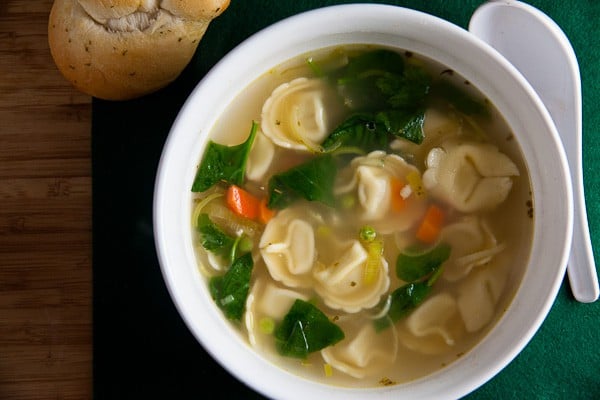
Chicken Stew with Tortellini


2 c. water
1 14 oz, can chicken broth
1 med. yellow squash cut
6 c. spinach or greens
1 green pepper
1 c. dried tortellini
1 med. onion cut in thin wedges
1 med. carrot sliced
1 1/2 tsp. rosemary
1/2 tsp. seasoning blend
1/4 tsp. pepper
2 c. cooked chicken
1 TBS basil

In dutch oven bring water and broth to a boil.  Add squash, greens, pepper, pasta, onion, carrot, rosemary, seasoning and pepper to dutch oven. Return to boil.  Reduce heat. Simmer covered for 15 min.  Stir in chicken.  Cook covered 5 min.  Stir fresh basil in soup.  Top with grated parmesan.

Don't forget reading recipes is just as great as reading books!

Happy Reading!
Laura

Friday, January 31, 2014

Girl Power

It is always very difficult to find good quality biographies to read aloud.  Sometimes biographies tend to be long or wordy, not ideal for a read aloud.  Who Says Women Can't Be Doctors by Tanya Lee Stone, is not only a great biography to read aloud, it also encourages young girls to work hard no matter what their dream is.


In this book the author tells the story of Elizabeth Blackwell becoming the first woman doctor.  The story starts out giving a history of what the world was like in the 1830's.  It's great to start the book like this because it might be hard for girls now to understand that not too long ago women did not have many choices.  They were expected to stay home and take care of children, or perhaps become a teacher.  Then it goes on to tell about Elizabeth as a child.  From this part of the story children will be able to infer many different character traits like strong, curious, smart and determined.  Then a sick friend encourages Elizabeth to become a doctor, she wasn't sure at first but eventually decided to go for it.

When Elizabeth began applying to medical schools and she always heard back the same answer, "NO."  The author spends a few pages on the fact that Elizabeth was constantly told no, but never gave up.  What an important lesson for our children today- sometimes we have to fight hard for what we want.  Finally, Geneva Medical School accepted Elizabeth, but that didn't mean the job got any easier.

Elizabeth was teased, ignored and disliked by other students and people in the town, but that did not stop her from working hard and studying.  She graduated from medical school with the highest grade in the entire class and the first woman doctor in American, inspiring many others.

We need to make sure to make time to read about amazing women and their resiliency to achieve greatness so that our young girls know they can also achieve greatness!  This book is great from grades 4 and up.  The back of the book also gives more information about Elizabeth Blackwell after she graduated from school.

If your girls like learning about Elizabeth Blackwell check out Clara Barton and Florence Nightingale also!

Happy Reading!
Laura


Tuesday, January 28, 2014

Books With Repetition

I know I have written about this before, but reading books with repetition to young children, even pre-readers is a great way to build many different emergent reader skills.

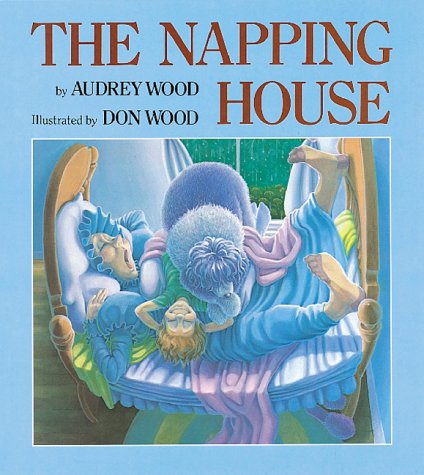
One book with repetition that is fun to read is The Napping House by Audrey Wood. This book is all about a house on a rainy day where the grandma, the child and all the animals are napping... in the same bed.  That is until the wakeful flea bites the mouse and wakes everyone up!


So what makes this book so great for young children?  How does it help them to learn to be readers?  Well the first feature is the predictability in the repetition.  In the napping house each page ends with "in a napping house, where everyone is sleeping."  Children catch on to that repetition very quickly and soon they will begin saying the words with you as you read them.  Next, when the child is "reading" the book by themselves you will notice that the say the repeated phrase over and over."  Then, when you are reading to them you will notice that they will begin to point to the repeated phrase and that will slowly evolve to pointing to each word in the repeated phrase.  This is called one-to-one matching or corresponding- and early reader skill.  It is repeated phrases like this one that help children to become readers.  

A few other things that this book has that helps children become readers is pictures that match the words.  The Napping House is a progressive book.  On each page someone new climbs into the bed.  For a child that is beginning to read they will be able to use the picture to figure out who gets in the bed next.  The pictures help to give meaning to the text. 

Lastly, this book has great vocabulary.  Here are all the different words that the author uses for the word sleep: napping, snoring, dreaming, dozing, snoozing and slumbering.  What great words for kids to learn.  When reading this aloud take time to point out how all those words mean the same thing- sleep!  

Here are some other books we love to read that have repetition to help young children become readers:

Goodnight Gorilla
Click, Clack, Moo
Jump, Frog, Jump
No David
Brown Bear, Brown Bear

Happy Reading!
Laura

Friday, January 24, 2014

Patterns

As a teacher, math was always the subject that I struggled with connecting to literacy.  I could never find great books about the topic.  I usually just ended up making up my own stories (which my students loved).  However, there are a few math concepts that have some really great read alouds and one of those concepts is patterns.

Trudy Harris and Anne Canevari Green have collaborated to create two really great books to help teach the idea of patterns in Pattern Fish and Pattern Bugs.  Even though patterns are nowhere to be found in the common core for primary grades, basic patterns are essential for understanding higher math problems- because as these books will show you patterns are everywhere!


The books are both very similar except for one uses bugs and the other uses fish.  Harris, who is a teacher and wrote these books for her class, writes a cute rhyme that has a pattern like, "Up-down-around-around, up-down-around-around.  A silky silver moth takes flight near the lamppost, late at night.  Up-down-around-around, up-down-around-around, up-down-around..." Then the pattern will stop and you have to turn the page to find out what comes next in the pattern.  It is also neat because the illustrations have patterns everywhere.  There might be a color pattern, a shape pattern or an up down pattern.  It is fun to look at the illustrations with your class to see what patterns they can find.

These books have endless ideas for activities from creating your own pattern bug or fish to adding numbers to the patterns to see how patterns look using numbers.

Happy Reading!
Laura

Thursday, January 23, 2014

Snow Days

With much of the country covered in snow and in below zero temperatures I am sure there are plenty of kids at home enjoying a SNOW DAY!

This map shows the snow amounts across the country. 

In honor of the snow and cold temperature, this week's Throwback Thursday is dedicated to the classic by Ezra Jack Keats, The Snowy Day.  In the story Peter wakes up to every child's dream, the ground is covered in deep, cold snow.  He does not waste anytime, eats his breakfast, gets dressed and heads outside to play.  Peter explores the different ways to make tracks in the snow.  He walks with his feet pointed in, he drags his feet and he finds a stick to make a track with.  Peter continues to play in the snow.  He sees the big boys having a snowball fight, he makes a snowman and a snow angel.  The very last thing he does is make a snowball to put in his pocket to save for tomorrow.  That night when he goes to check on his snowball and it had melted.  But it doesn't matter because when he wakes up the next morning the snow is still there and new snow is falling.  


Ezra Jack Keats does a great job of painting a picture of every child's dream snow day.  There is not a single snow day activity that he missed, except for maybe the hot chocolate.  He was even able to capture the sounds of a snow day using words like,  crunch crunch crunch, s-l-o-w-l-y, and plop.  I can't think of a better book to share on a snowy day like today.  

So bundle up and get outside to play because we all know in a couple of months we will be wishing for cooler temps.  

Happy Reading!
Laura