I started to realize that I have not posted any informational books (informational books are what we used to call "non-fiction"). I hate that I have totally ignored this genre for reading aloud because it is often the favorite of many children.
One reason we tend to not read aloud informational books is because they can be wordy and technical. It can also be very hard to find a "good" informational book to share with a child or children. Before I share with you my informational pick of the week I want to offer you some tips for reading aloud informational books.
1) Pick a topic that interests the child. Think animals, biographies, places or even how-to books.
2) Preview the text. Before you sit down to read the book to a child or an entire class look at the book.
If it is wordy and technical pick out a few pages that are the most interesting and then leave the book setting out for the child to pick up and look through on their own.
3) Read only a section at a time. There is no hard and fast rule that when you read a book aloud you need to read the entire book. Begin reading the informational book and when you can tell that interest is lost put it down only to pick it up and resume reading later.
4) Read the text features. Informational books are known for their great pictures and text features (maps, diagrams, labels, charts etc.) If there are too many words on a page simply read and talk about the text features. Sometimes that is the part that is the most interesting anyway!
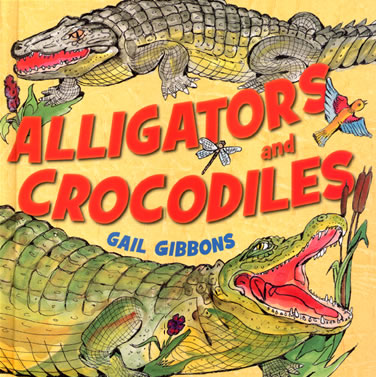
So, now onto my recommendation. This week I chose a book by Gail Gibbons. She is a very popular informational text author and has written over 100 book on a variety of topics. The one I am sharing with you today is
Alligators and Crocodiles.
I chose (actually my son chose) this book because right now alligators are an obsession in our house. When we arrived at the library he immediately wanted a book about alligators so after setting out a few choices this is the one he decided to bring home.
At first I was worried because I thought that this book might be a little too much for him but it has the perfect combination of words and pictures to keep him interested and learning about alligators. Of course since he is only one and a half he mostly likes looking at the pictures but there are some interesting facts in there for me!
The book covers everything from habitats, diets, body features, babies and even threats to the alligators and crocodiles. Gail Gibbons uses a lot of labels on her pictures to give even more information about the animals. It is a lengthy book (32 pages) so we have read it in several different sittings but if you were using it in a classroom you could definitely pick out the relevant pages to read aloud.
So make sure to add some informational books to your daily read alouds! I am sure your audience will love them!
What are some of your favorite informational books to read to children?
Happy Reading!
Laura